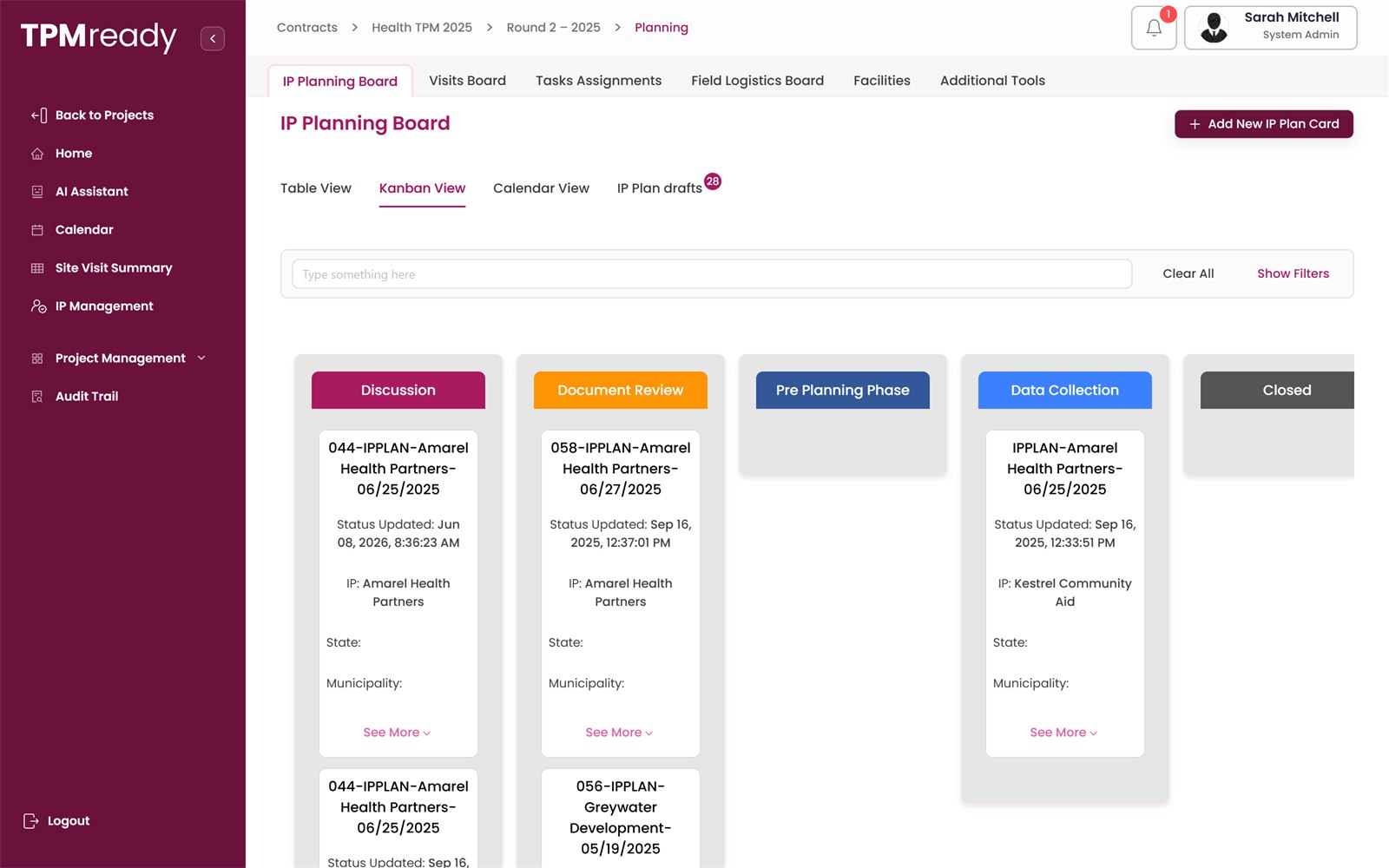
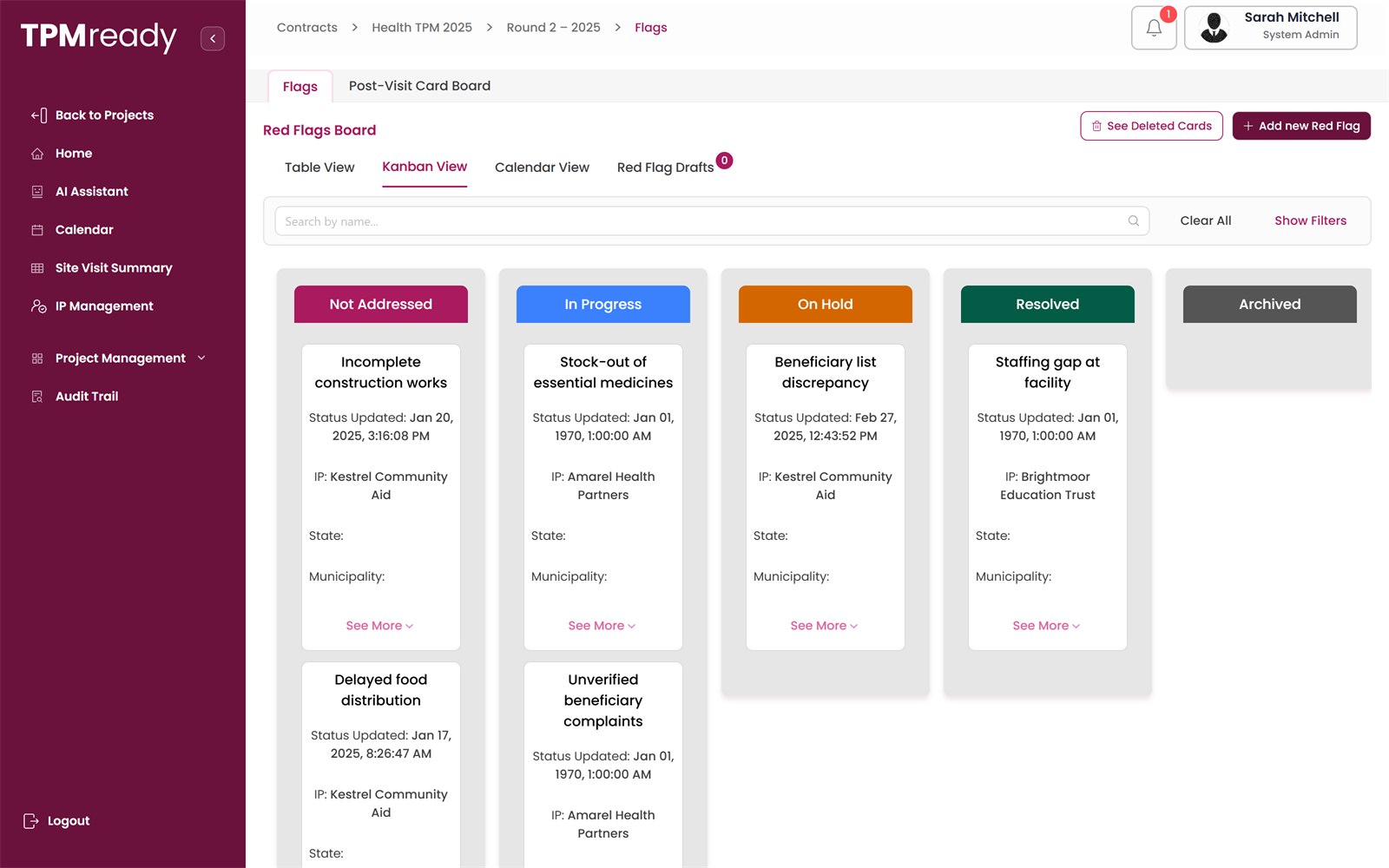
Monitoring is not only about counting visits; it is about finding problems. A red flag is a serious issue found during monitoring that needs follow-up. How flags are recorded and followed largely decides whether monitoring changes anything.
What counts as a red flag
Agree a list of issue types with the client at the start of the contract, so that flags are comparable across teams and rounds. A typical list includes:
- Supply or stock-out
- Staff absence
- Data quality
- Beneficiary complaint
- Infrastructure
- Access constraint
- Safeguarding
- Financial irregularity
- Service delay
What to record for each flag
| Field | Why it matters |
|---|---|
| Description | What was observed, in plain and factual language. |
| Visit and partner | Links the flag to its evidence and to the responsible implementer. |
| Location | Makes geographic patterns visible. |
| Issue type | Allows comparison and pattern detection. |
| Owner and deadline | Someone is accountable for follow-up, by a date. |
| Status | Shows where follow-up stands: not addressed, in progress, on hold, resolved or archived. |
From single flags to patterns
One flag may be bad luck. Several active flags of the same type in the same area, or for the same partner, within a short period usually point to something systemic. For example, three clinics in one district reporting a stock-out of the same medicine within a month suggests a supply-chain problem rather than three local failures.
Set explicit thresholds, such as how many flags within how many days, so that patterns are detected consistently rather than noticed by chance.
Handling safeguarding concerns
Safeguarding flags need particular care. Follow your organisation's and the client's safeguarding policy and reporting lines; record only what is necessary; and restrict who can see the details. A monitoring system should support those procedures, never replace them.
Closing the loop
- Review open flags at a fixed rhythm, such as weekly during fieldwork.
- Escalate flags that pass their deadline without progress.
- Track recommendations from each visit on a follow-up card until they are closed.
- Verify resolution on the next visit where possible, rather than accepting a status change alone.
- Report patterns to the client as systemic issues, with the underlying flags as evidence.